The residue cycle: why bin odours come back so fast?
If you’ve ever opened your garbage or green bin and thought, “How does this smell again already?” you’re not imagining it.
For most households, odours don’t come back because the bin is “full.” They come back because the bin is still holding residue from the last round—even after collection day.
That’s the residue cycle:
- waste goes out
- small leaks and grime leave a film behind
- moisture gets trapped
- warmth speeds everything up
- odours rebound fast
Here’s what’s actually happening inside the bin, where the problem tends to hide, and what helps break the cycle in a practical, week-to-week way.
Why “empty” and “clean” are not the same thing
Collection day removes the bags. It does not remove:
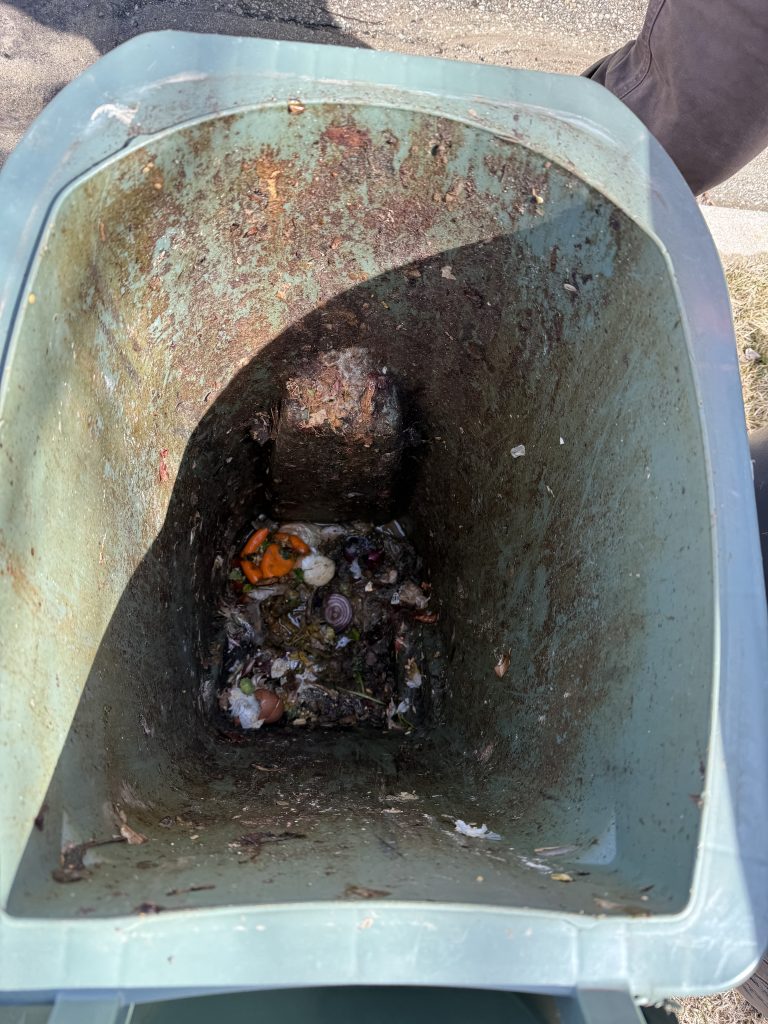
- greasy film
- drips that ran down the sides
- residue in corners and seams
- buildup around the lid and hinges
So a bin can look empty and still be holding onto the exact layer that causes smell to return.
If you’ve ever rinsed a bin and still noticed odours a day later, it’s usually because the rinse didn’t remove the film—it just moved moisture around on top of it.
Where residue hides (even when you can’t see it)
Bins are designed with seams, texture, and corners—great for strength, not great for cleanliness. The worst buildup tends to hang on in a few predictable places:
Lid rim
This is one of the biggest culprits. It catches splashes and drips, holds moisture, and rarely gets cleaned properly.
Hinges and underside of the lid
Grime collects where people don’t naturally look, and it sits in a spot that’s constantly exposed to heat and trapped air.
Bottom corners
Leaks settle here. Even “small” drips can create a stubborn layer over time, especially in textured plastic.
Side walls and seams
Residue can cling in thin streaks down the inside walls and get trapped in seams where water doesn’t rinse cleanly.
Why odours come back so quickly
Odour rebound is usually a combination of three things:
1) Residue film
If the film stays, the source stays.
2) Moisture
Moisture activates the film. Once there’s dampness inside (even from rain, condensation, or a quick rinse), smells become noticeable faster.
3) Time + temperature
Warm days speed everything up. Closed lids trap humidity. Garages and side yards can turn a small amount of residue into a strong smell quickly.
That’s why bins often seem “fine” for a moment, then suddenly smell bad again—nothing new had to happen. The conditions just shifted.
A few habits that help between pickups
You don’t need to overcomplicate it, but small changes can reduce how much residue gets created in the first place:
Drain liquids before bagging
If something is wet, let it drain or absorb it with paper before it goes in the bin
.
Wrap messy waste
Greasy containers, meat packaging, and wet scraps are common leak sources. Wrapping them helps keep drips contained.
Use a simple liner at the bottom
A piece of cardboard or flyer paper in the bottom can catch small leaks and get swapped out weekly.
These won’t “deep clean” the bin, but they help slow the cycle and make odours less aggressive.
What a proper reset focuses on
A true bin reset is not about making the bin look a bit better for an hour. It’s about removing the residue layer that keeps coming back.
That means targeting the places that actually hold the grime:
- lid rim
- hinges
- handles
- seams
- bottom corners
When those areas are properly cleaned, bins tend to stay fresher longer because the source of the smell is reduced—not just masked.
The takeaway
If your bin smells again right after collection, it usually isn’t because something new happened—it’s because residue from last week is still there, and moisture + warmth are doing what they do.
Breaking the residue cycle comes down to two things:
- reducing leaks week-to-week
- removing the film when it builds up
Once the source is dealt with, the bin doesn’t just look cleaner—it stays easier to live with.